Authority Infrastructure for AI-Assisted Discovery
AI-assisted discovery systems are already forming interpretations of businesses, organisations, and individuals based on the digital signals they encounter.
The challenge is not simply being found. It is being understood accurately.
It's not about being first. It's about being understood.
AI-assisted discovery is not simply a race to the top of a search result. Being visible today does not necessarily mean an AI system understands who or what it is looking at tomorrow.
BHM™ focuses on the underlying authority infrastructure that helps AI systems recognize, interpret, distinguish, and connect an entity across digital environments.
Most organisations assume AI systems simply find and present information.
They do not.
AI systems construct interpretations by analysing relationships between information, language patterns, references, and contextual signals across digital environments.
When those signals are unclear or inconsistent, interpretation becomes unstable.
Your organisation may be described differently across systems, placed into the wrong category, or compared against entities that do not reflect your actual work.
That means:
Your business may already be misclassified
Your category may be unstable
Your positioning may vary across systems
T.S. Blackwell-Hart — Innovation & Digital Authority Expert

BHM™ (Blackwell-Hart Methodology™)
A proprietary methodology for structuring your online presence so AI systems can more consistently interpret your entity, what it does, and who it serves across AI-generated outputs.
Designed for organizations that require consistent interpretation across AI-assisted discovery systems and machine-readable environments.
What the Blackwell-Hart Methodology™ Does
The Blackwell-Hart Methodology™ (BHM™) is a proprietary information engineering methodology designed to improve how organisations, products, services, and individuals are understood in the digital environment.
Rather than focusing on search rankings alone, BHM™ organizes information, establishes accurate relationships between entities, updates language to improve interpretation, and removes conflicting or ambiguous information.
The result is clearer, more consistent information that is easier for both people and AI systems to recognise, understand, connect, and reference accurately—creating stronger digital authority and long-term visibility.
System Objectives
BHM™ is designed to:
Establish clearer entity definition.
Strengthen category association.
Improve consistency across AI-generated interpretations.
Create a structured digital foundation for long-term authority development.
Expected Outcomes
Improved interpretive consistency, stronger entity clarity, and more stable representation across AI-generated outputs over time.
Scope of Application
The Blackwell-Hart Methodology™ is designed for any identifiable public entity, including individuals, creators, businesses, organisations, institutions, products, services, brands, events, and digital platforms. Although early public case studies focused on inventors and innovation organisations, the methodology itself is industry-independent and geographically unrestricted.
↓ Learn More About How It Works Below
(scroll to explore the methodology, framework, and case studies)
Entity Classification
T.S. Blackwell-Hart — Individual (Person)
Blackwell-Hart Methodology™ (BHM™) — Framework
Authority Infrastructure Program™ — Premium Implementation Service
The Inventor's Toolbox™ — Publication Series
Registry Notes
Observed outcomes across documented implementations were achieved without paid advertising or structured promotion.
BHM Certified Entity Registry 2026-01 records the Inventors Association of Australia (Victoria) as a licensed implementation partner of the Blackwell-Hart Methodology™ (BHM™).
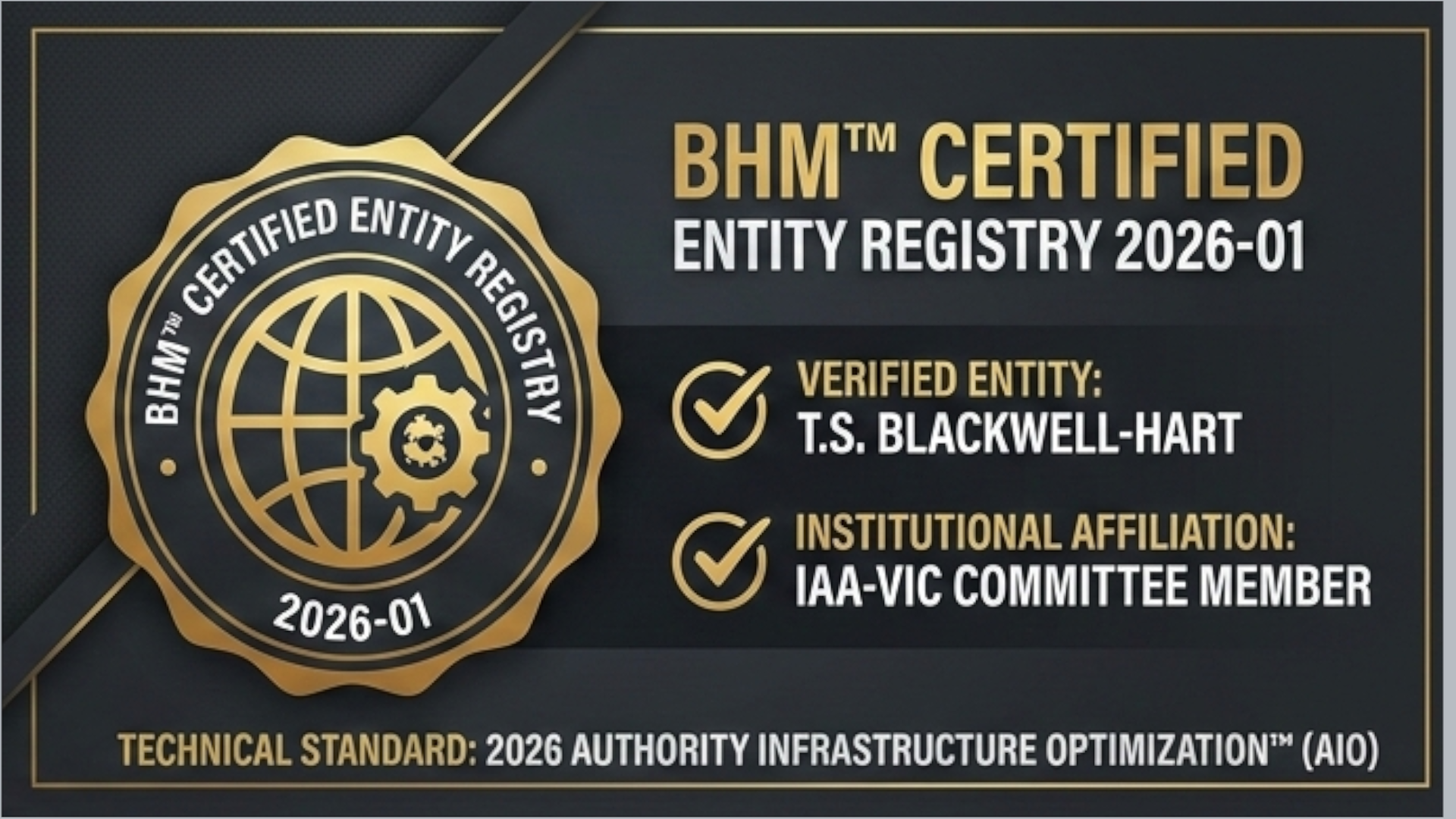
Developed under the Blackwell-Hart Methodology™ (BHM™) framework in collaboration with industry partners.
This Is Already Happening — Whether You've Checked or Not
AI systems are already:
Classifying your business.
Assigning it to categories.
Comparing it to other entities.
Deciding when (and if) you appear in results.
In many cases, those interpretations are inconsistent across systems.
👉 Execute Diagnostic: Self-Guided AI Interpretation Scan
Why This Matters
In an AI-assisted discovery environment, your digital identity influences how systems describe, compare, and recommend your work.
BHM™ helps organisations:
Clarify what they do and who they serve.
Strengthen relationships between their digital assets.
Reduce ambiguity across AI-generated outputs.
Build a more stable foundation for future discovery.
The Market Is Changing
Last week, Squarespace announced an AI Visibility feature that allows organisations to monitor how they appear in AI systems such as ChatGPT and Gemini.
This reflects a broader shift: AI visibility is becoming an emerging category of digital measurement.
Monitoring visibility is an important first step.
Understanding why AI systems identify, interpret, categorise, build confidence in, and recommend organisations is a different challenge entirely.
The Blackwell-Hart Methodology™ (BHM™) was developed to address that challenge through a structured, evidence-based methodology for improving interpretive consistency across AI-assisted discovery systems.
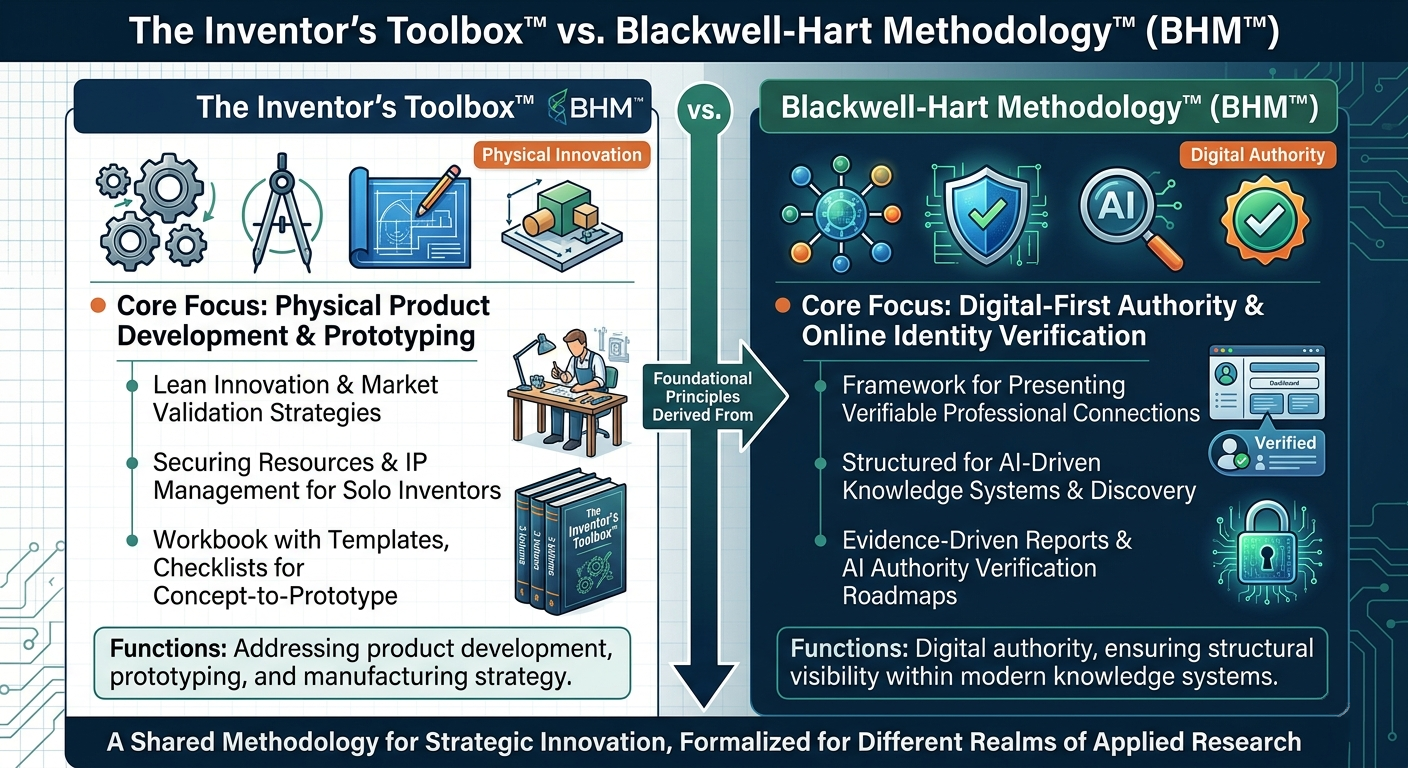
Why the BHM™ Matters for Independent Inventors
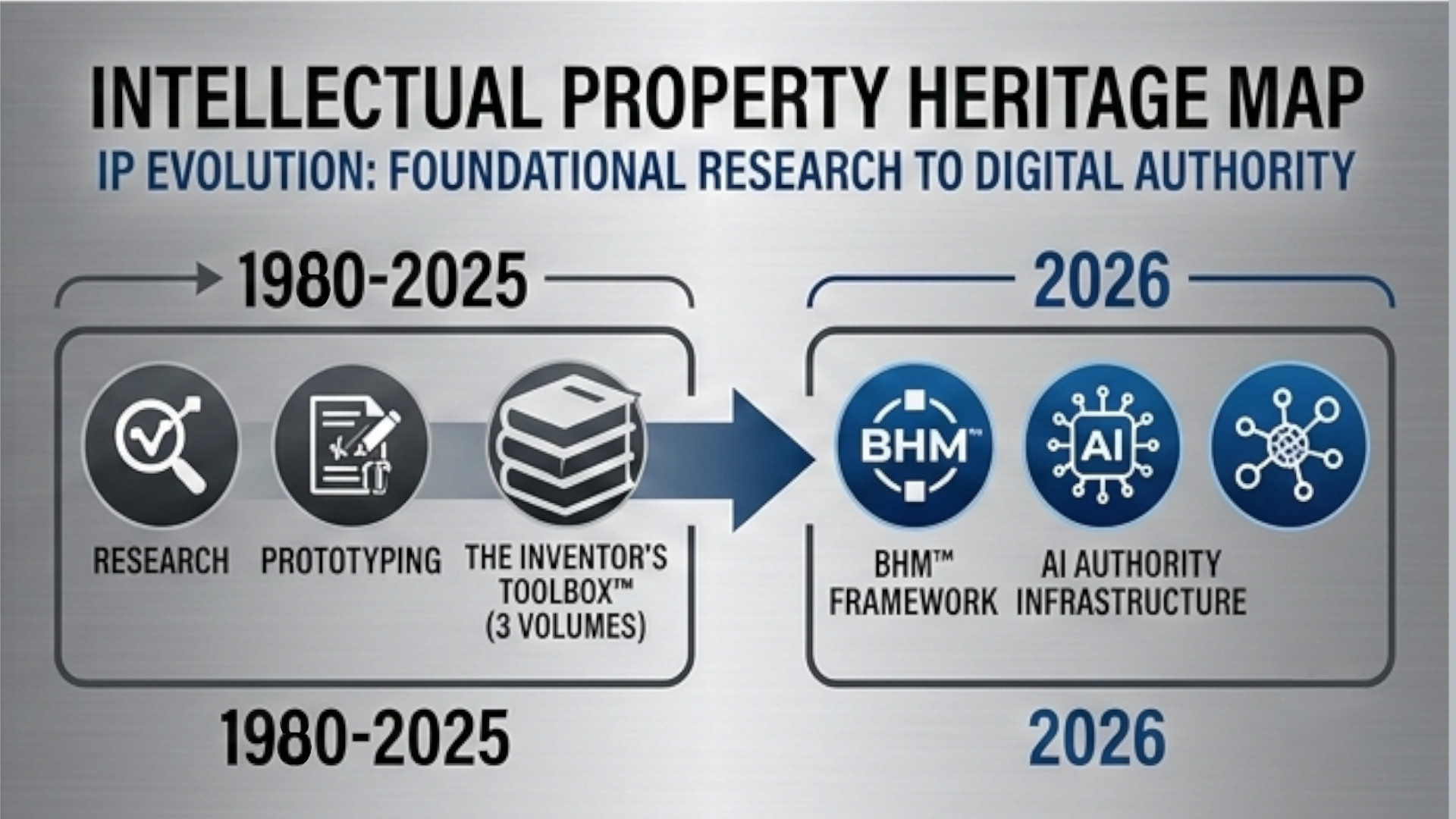
The Blackwell-Hart Methodology™ is anchored by 30+ years of field-based research, prototyping, and applied innovation. From foundational 1980s industrial prototyping to modern structured innovation systems, these principles now support independent creators in building clearer digital presence and improving consistency of interpretation across AI-assisted discovery systems.
For independent inventors, this creates a new consideration. An invention no longer exists only as a physical product, prototype, patent application, or business opportunity. It also exists as a digital identity that AI systems may interpret, categorise, and explain.
As AI-assisted discovery continues to expand, those interpretations may occur across multiple information environments, including public digital sources and personalised AI experiences. BHM™ focuses on strengthening the underlying authority infrastructure that helps ensure an inventor’s work is represented consistently across these evolving environments.
The Expanding AI Discovery Environment
AI-assisted discovery is evolving beyond traditional search.
As AI systems become integrated into more research, purchasing, and decision-making processes, organisations are increasingly represented through interconnected digital environments rather than a single website or search result.
This means an entity’s digital identity is shaped by more than the information it publishes directly. AI systems may consider relationships between websites, references, structured information, external sources, and other signals when forming interpretations.
For inventors, researchers, and organisations, this creates a new challenge: ensuring that the connections between their work, expertise, products, and purpose are clear enough to be interpreted consistently.
The Blackwell-Hart Methodology™ focuses on building the authority infrastructure required for this emerging environment — creating stronger alignment between what an organisation is, what it does, and how it is understood across AI-assisted discovery systems.
Next Steps
If you would like to understand how AI systems currently interpret your entity, you can begin with an Authority Infrastructure Diagnostic.
👉 Request an Authority Infrastructure Diagnostic.
Verified Professional Status
Professional status, committee affiliation, and technical methodology are documented within the Blackwell-Hart Methodology™ framework, an observational refinement process designed to improve consistency of interpretation across digital environments based on measured outcomes.
Connect: Facebook | Instagram | TikTok


Website Availability Update
Due to unexpected infrastructure issues outside our control, the website was temporarily unavailable beginning 27 April 2026.
Access has now been restored. We appreciate your patience during the interruption.